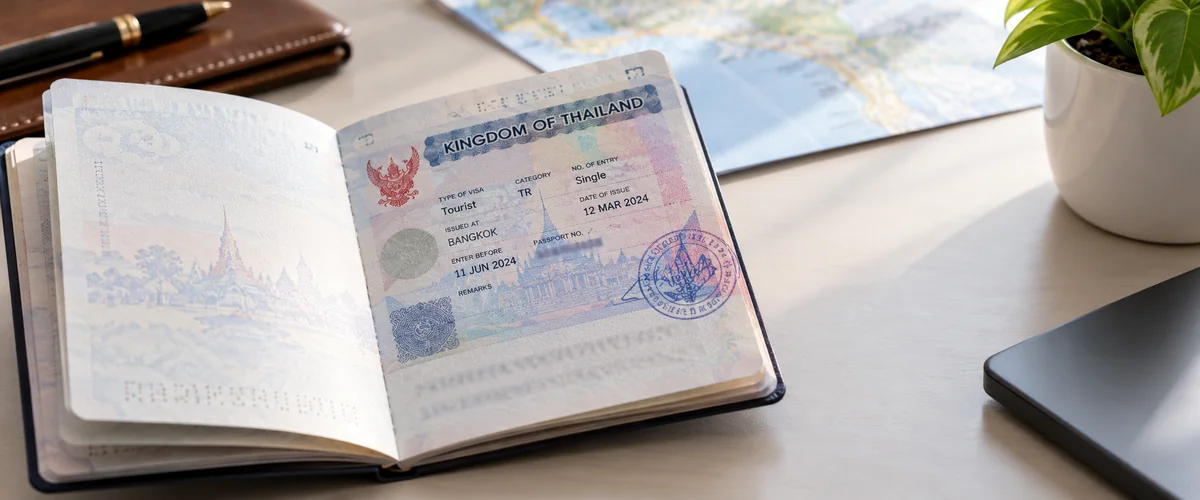
Destination Thailand Visa (DTV) 2026: Requirements and How to Apply
The DTV is a 5-year, multiple-entry visa allowing stays of up to 180 days per entry. Each stay can be extended once by up to 180 days in Thailand for 1,900 THB. It is open to people aged 20+ who are either:
- remote workers or freelancers working for clients or employers outside Thailand, or
- taking part in approved "soft power" activities such as Muay Thai, Thai cooking or medical treatment.
You need proof of 500,000 THB in funds, and the government fee is about 10,000 THB.
Since 31 August 2026 you must apply through the Thai mission covering your nationality or permanent residence, and include a police certificate.
| Validity | 5 years, multiple entry |
|---|---|
| Stay per entry | Up to 180 days, extendable once in Thailand by up to 180 days (1,900 THB) |
| Funds | 500,000 THB or equivalent; most missions want about 3 months of statements showing the balance |
| Government fee | 10,000 THB (charged in local currency by each mission) |
| Where to apply | thaievisa.go.th, to the mission for your nationality or country of permanent residence (since 31 Aug 2026). Not inside Thailand |
| Police certificate | Required at all missions since 31 Aug 2026 (maximum age varies by mission) |
| Dependants | Spouse and children under 20 can apply as DTV dependants |
| Work in Thailand | Not permitted. Remote work for foreign employers/clients only |
Who qualifies for the DTV?
- Workcation: remote workers, digital nomads and freelancers. Evidence typically includes an employment contract or client contracts with non-Thai entities, a portfolio, or company registration abroad.
- Soft power activities: enrolment in Muay Thai training, Thai cooking, Thai massage, medical treatment or other approved programmes. Since 2026, Thai language school enrolment is no longer reliably accepted; use the education visa for that.
- Dependants of a DTV holder: legal spouse and children under 20.
What documents do I need?
- Passport valid for at least 6 months
- Recent photo
- Proof of current location (your nationality or residence permit for the country you apply from)
- Financial evidence of at least 500,000 THB, usually bank statements for the last 3 months. Investment and crypto balances are generally not accepted as primary proof
- Evidence of remote work or soft-power enrolment
- Police certificate (since 31 August 2026)
- Any additional items on your mission's checklist. Some missions ask for health insurance evidence, but this is not a universal DTV rule
What changed for the DTV on 31 August 2026?
- Jurisdiction: missions accept applications only from nationals or permanent residents of the country they cover. "DTV runs" to apply in a neighbouring country (e.g. Vientiane, Kuala Lumpur) are no longer possible unless you live there legally.
- Police certificate is now mandatory.
- More scrutiny of remote-work evidence and of soft-power enrolments.
How does the 180-day stay and extension work?
Each entry gives up to 180 days. Before that ends you can apply once at immigration (Jomtien in Pattaya) for an extension of up to 180 days for 1,900 THB. To stay longer you leave and re-enter, which starts a new 180 days. You must do 90-day reports during long stays and file TM30. If you plan to leave and return during a stay, check whether a re-entry permit is needed for the extended part. We recommend getting one when travelling during an extension.
Can I open a bank account or get a driving licence on a DTV?
Many Thai banks classify the DTV like tourist status and refuse personal accounts, especially since the 2024–25 anti-fraud measures. Some DLT offices accept DTV holders for licences with a residence certificate, but practice varies. See bank accounts by visa type.
Frequently asked questions
Can I apply for the DTV inside Thailand?
No. The DTV is issued only through the e-Visa portal to applicants outside Thailand, and since 31 August 2026 only by the mission for your nationality or country of permanent residence.
How much money do I need for a DTV?
At least 500,000 THB or the equivalent in foreign currency, typically shown with about 3 months of bank statements. Requirements can be stricter at some missions.
Does the DTV need health insurance?
There is no universal Thai immigration rule requiring insurance for the DTV. A few missions have included insurance in their checklists. Check the checklist for the mission you apply to.
Can I work for a Thai company on a DTV?
No. The DTV permits remote work for employers and clients outside Thailand. Working for a Thai business requires a Non-B visa and a work permit.
Do I need to do 90-day reports on a DTV?
Yes, if you stay in Thailand for more than 90 consecutive days. The count restarts each time you enter.
Do I pay Thai tax on a DTV?
If you spend 180 days or more in Thailand in a calendar year you become a Thai tax resident, and foreign income you bring into Thailand may be taxable. See Thai tax for expats.
Can I do a DTV and then a retirement visa?
Yes, if you are 50+, but the switch normally means leaving Thailand and entering on a Non-O. See DTV vs retirement visa.
How much does the DTV cost?
The government fee is 10,000 THB, charged in local currency by the mission handling your application. A 180-day extension in Thailand costs 1,900 THB.
Can I apply for a DTV in Laos or Malaysia?
Only if you are a national or permanent resident there. Since 31 August 2026, Thai missions accept DTV applications only from nationals or legal residents of the country they cover.
Can I bring my family on a DTV?
Yes. A legal spouse and children under 20 can apply for DTV dependant visas. They need proof of the relationship and the main applicant's DTV.
Does Muay Thai training qualify for a DTV?
Yes. Enrolment in a Muay Thai course at a recognised gym is a common soft-power basis for the DTV. Missions expect proof of enrolment and payment, and scrutiny has increased in 2026.
Does a Thai language course qualify for a DTV in 2026?
Not reliably. Missions stopped treating Thai language school enrolment as a qualifying soft-power activity in 2026. Use the Non-ED education visa for language study.
How long does a DTV application take?
Missions typically process e-Visa applications in about 1–3 weeks, but timelines vary and police certificates add time. Apply well before you plan to travel.
Official sources and how we checked
We checked the facts on this page against the sources below on 17 October 2026. Government and regulator sources are marked Official. Others are only used to confirm how offices apply the rules in practice.
- Thai e-Visa — official application portal — Ministry of Foreign Affairs Official
- Visa Exemption and Visa on Arrival Schemes — Royal Thai Embassy, London Official
- Thai Immigration Bureau — official website — Immigration Bureau, Royal Thai Police Official
- Thailand visa changes 2026: September dates and DTV — ThaiLawOnline (secondary)
Facts, guidance and advice: fees, money thresholds and legal deadlines on this page come from the sources above. Comments on how the Pattaya (Jomtien) office handles things are our day-to-day experience and can change without notice. Immigration officers have discretion, and none of this is legal advice for your situation. Fees shown are government fees. Nan Services' own service fees are separate and are quoted in writing before any work starts.